 English
  Chinese
 July 10, 2026 – The global automotive battery tester market is undergoing a structural transformation, with China’s domestic brands rapidly closing the gap on established international players. Industry analysts project the Asian battery tester market to grow from US$1.2–1.4 billion in 2026 to US$2.4–2.8 billion by 2035, driven primarily by two forces: the proliferation of start-stop systems and the rise of new energy vehicles (NEVs).
Dual Engines of Growth
Start-stop batteries—specifically AGM (Absorbent Glass Mat) and EFB (Enhanced Flooded Battery) types—now account for over 65% of new passenger vehicles sold in China. Unlike conventional lead-acid batteries, these units operate under partial-state-of-charge conditions, rendering traditional voltmeters and load testers increasingly inadequate. Professional diagnostic tools capable of measuring State of Health (SOH) and State of Charge (SOC) with ±0.5% accuracy have become essential across dealerships, independent workshops, and fleet maintenance operations.
Simultaneously, the NEV sector—particularly the growing fleet of electric vehicles requiring 12V auxiliary battery support—has opened a parallel demand channel. While high-voltage traction batteries draw most attention, the reliability of low-voltage systems remains critical for door locks, infotainment, telematics, and safety features.
Domestic Substitution Gains Momentum
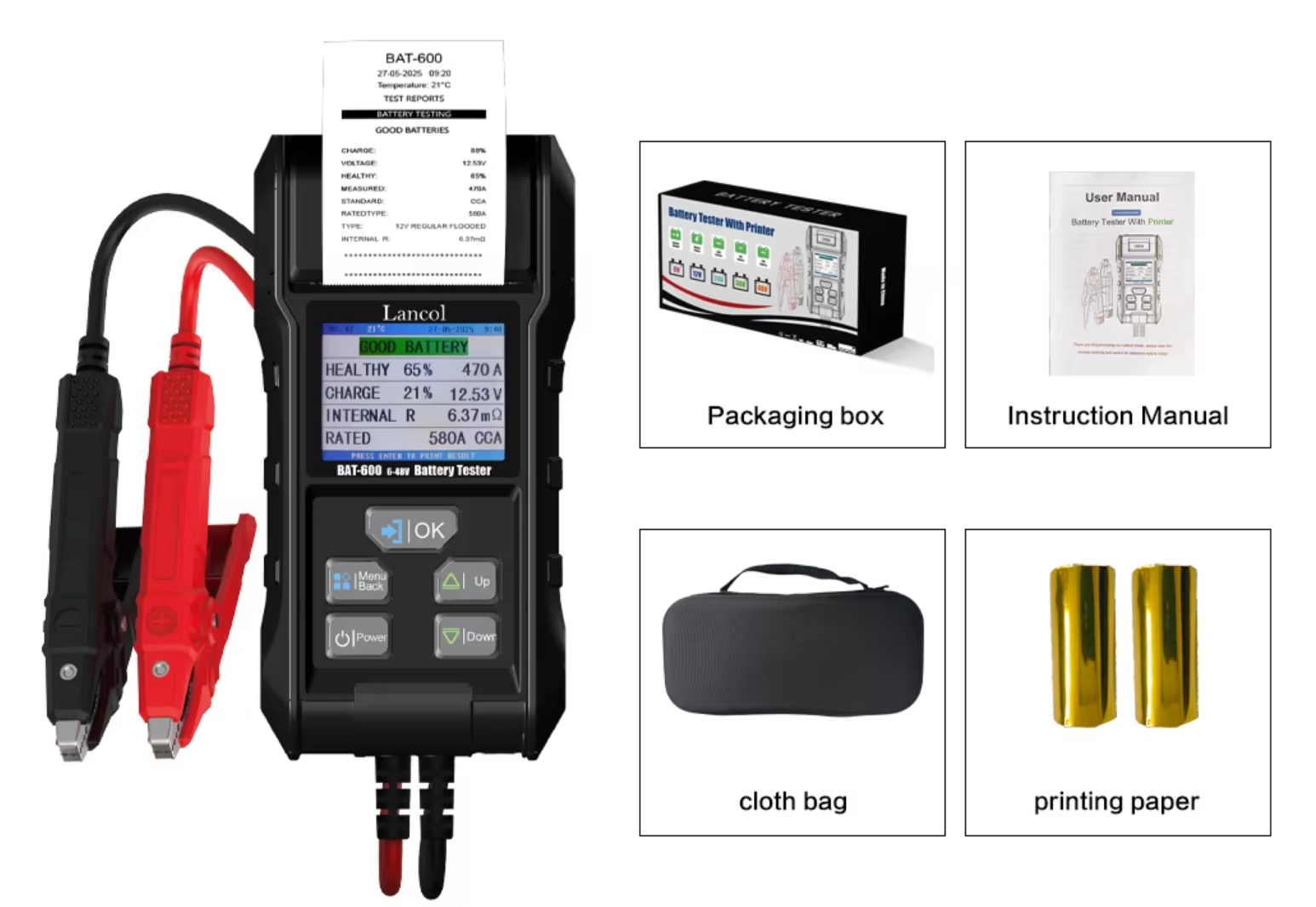
Perhaps the most telling trend is the accelerating shift toward Chinese-made testing equipment. Domestic manufacturers now offer products at roughly one-third the price of imported alternatives, with comparable accuracy and increasingly sophisticated features such as wireless data transmission, cloud-based reporting, and AI-assisted fault diagnosis.
“Five years ago, a premium workshop wouldn’t consider a Chinese-brand tester,” said an industry insider speaking on condition of anonymity. “Today, the value proposition is simply too compelling to ignore—especially when after-sales support and software updates are factored in.”
Technology Convergence
The current generation of battery testers reflects broader automotive megatrends:
- Connectivity: Bluetooth and Wi-Fi-enabled devices allow real-time data syncing with workshop management systems and OEM diagnostic platforms.
- Smart Algorithms: Machine learning models now predict remaining battery life with increasing accuracy, reducing warranty claims and roadside breakdowns.
- Multi-Chemistry Support: Leading testers accommodate not only AGM and EFB but also lithium-ion auxiliary batteries found in some hybrid and electric models.
Market Outlook
Looking ahead, three factors will shape the competitive landscape:
- OEM Integration: As battery sensors become smarter, tester manufacturers must maintain backward compatibility while adapting to new communication protocols.
- Regulatory Push: Stricter emissions standards indirectly favor accurate battery diagnostics—a weak battery forces the internal combustion engine to run more frequently in start-stop vehicles, increasing fuel consumption and emissions.
- Aftermarket Expansion: With the average vehicle age in China now exceeding 7 years, the replacement and maintenance cycle for start-stop batteries is entering a peak phase, fueling tester demand in the independent aftermarket.
The Road Ahead
While established global brands retain a foothold in high-end OEM channels, the mid-tier and aftermarket segments are increasingly contested territory. For Chinese manufacturers, the path forward lies not merely in price competition but in continuous innovation—particularly in software-defined testing capabilities and seamless integration with next-generation vehicle architectures.
As one market observer noted: “The battery tester is no longer a simple diagnostic tool—it’s a data node in the vehicle’s broader health ecosystem. And in that race, domestic players are no longer playing catch-up.”