 Chinese
  English
 Internal resistance testing of automotive batteries is a precise technical activity. The two mainstream testing methods are AC method and DC method.
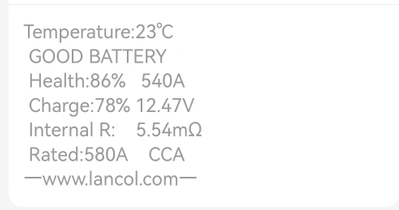
Internal resistance testing of automotive batteries is a core method for evaluating the state of health (SOH) of batteries and determining their performance and lifespan. Simply put, internal resistance is the resistance experienced by current passing through the interior of a battery, which directly affects the battery’s charging and discharging efficiency, power output capability, and aging degree.
The “health standard” for internal resistance varies depending on battery type, capacity, and voltage, but there are several key reference values:
For 12V lead-acid starter batteries, the internal resistance in a brand new state is usually between 4-6 milliohms (m Ω). When the internal resistance exceeds 10 milliohms, it indicates that the battery has severely aged and needs to be considered for replacement, otherwise it will affect the starting current and normal operation of the vehicle circuit.
For power battery cells: there are significant differences between different brands and materials. For example, a common reference is that the internal resistance deviation of each cell in the same battery pack should be controlled at around 0.2 milliohms to maintain consistency. The target value of internal resistance for power battery cells is usually lower (such as<5m Ω).
The internal resistance of a battery is not a fixed value. It will dynamically change with the state of charge (SOC), temperature, charging and discharging current, and battery life. Therefore, professional testing typically requires environments where these conditions are relatively controllable.
If you want to test your car battery internal resistance, please do not hesitate to contact us.
旋律
sales-2@lancol.com
0086 18391056516