 Chinese
  English
 Expectations for smart living
For decades, the car battery was an unseen component, often remembered only in its failure—the dreaded click of a dead starter on a cold morning, leading to inconvenient roadside assistance, towing, and unplanned expenses. This classic “reactive” model is being fundamentally transformed by a new battery testers designed for personal use, shifting the paradigm decisively towards “proactive warning.”
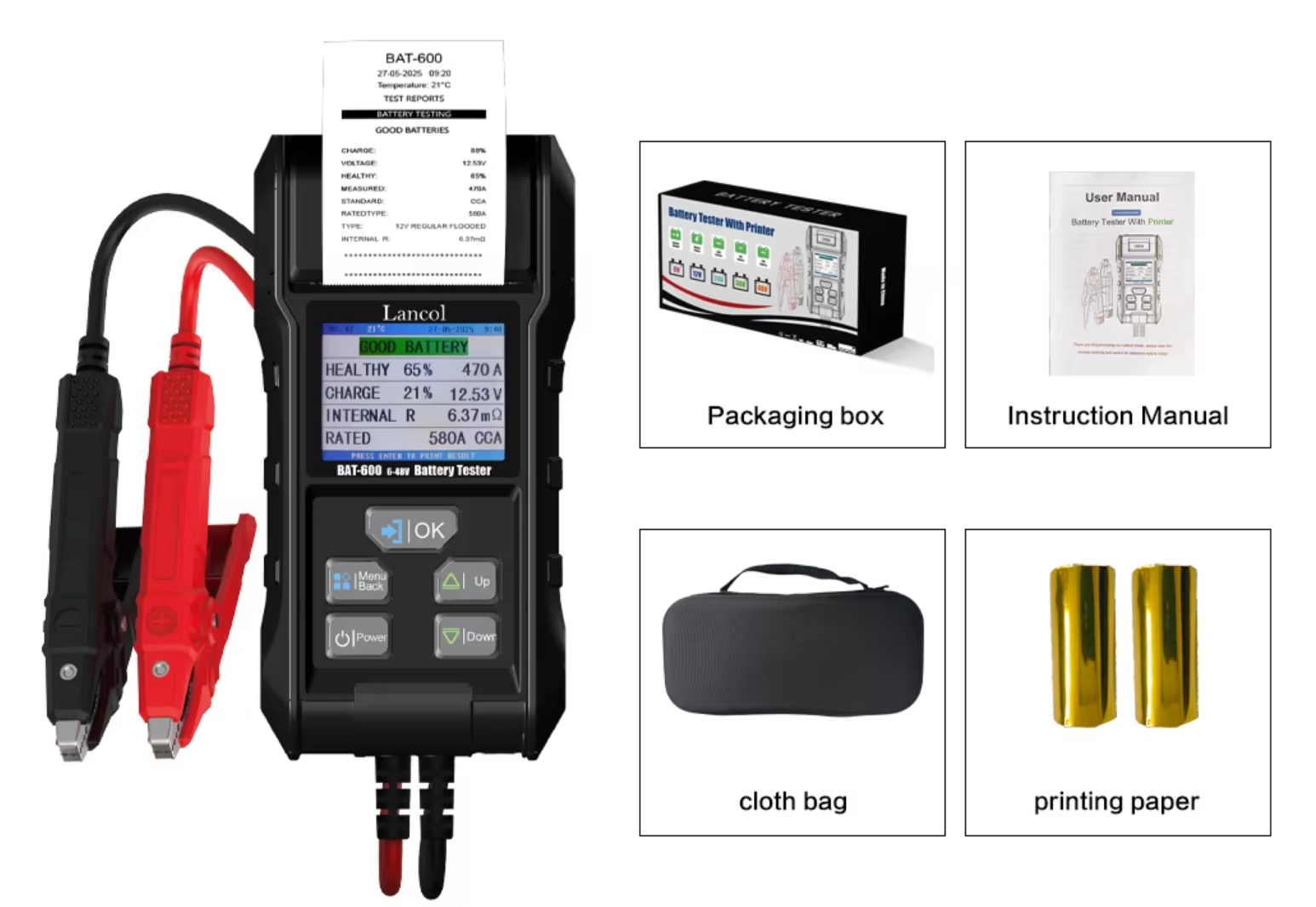
The current handheld testers provide a simple voltage or cold start current (CCA) reading. Future smart devices will be different. It serves as a ‘continuous guardian’ of battery health. These compact tools use advanced algorithms to go beyond static measurements by directly connecting to battery terminals or through OBD-II ports. They analyze internal resistance trends, monitor parasitic leakage currents over time, and evaluate the battery’s response during actual start-up cycles
This is where the shift to prevention happens. Instead of just telling you the battery is weak now, these devices learn its unique profile. They can Predict End of Life and send an alert to your smartphone when it drops below a safe threshold, recommending replacement at your convenience.
For the individual car owner, this is a leap from uncertainty to control. Imagine receiving a notification: “Battery Health at 25%. Suggest replacement within the next 30 days.” This allows for planned maintenance, prevents being stranded in unsafe situations, and extends battery life by highlighting poor charging habits. It empowers drivers with data previously available only to professional workshops.
The future points towards even deeper integration. These monitors will not only track the battery but also correlate data with weather forecasts, warning of increased failure risk during an approaching cold snap. They represent a key step in the democratization of automotive diagnostics, turning every responsible owner into an informed guardian of their vehicle’s heart, ensuring it starts not just today, but every tomorrow.